
About this webinar
Webinar in partnership with LearnFormula. Register here.
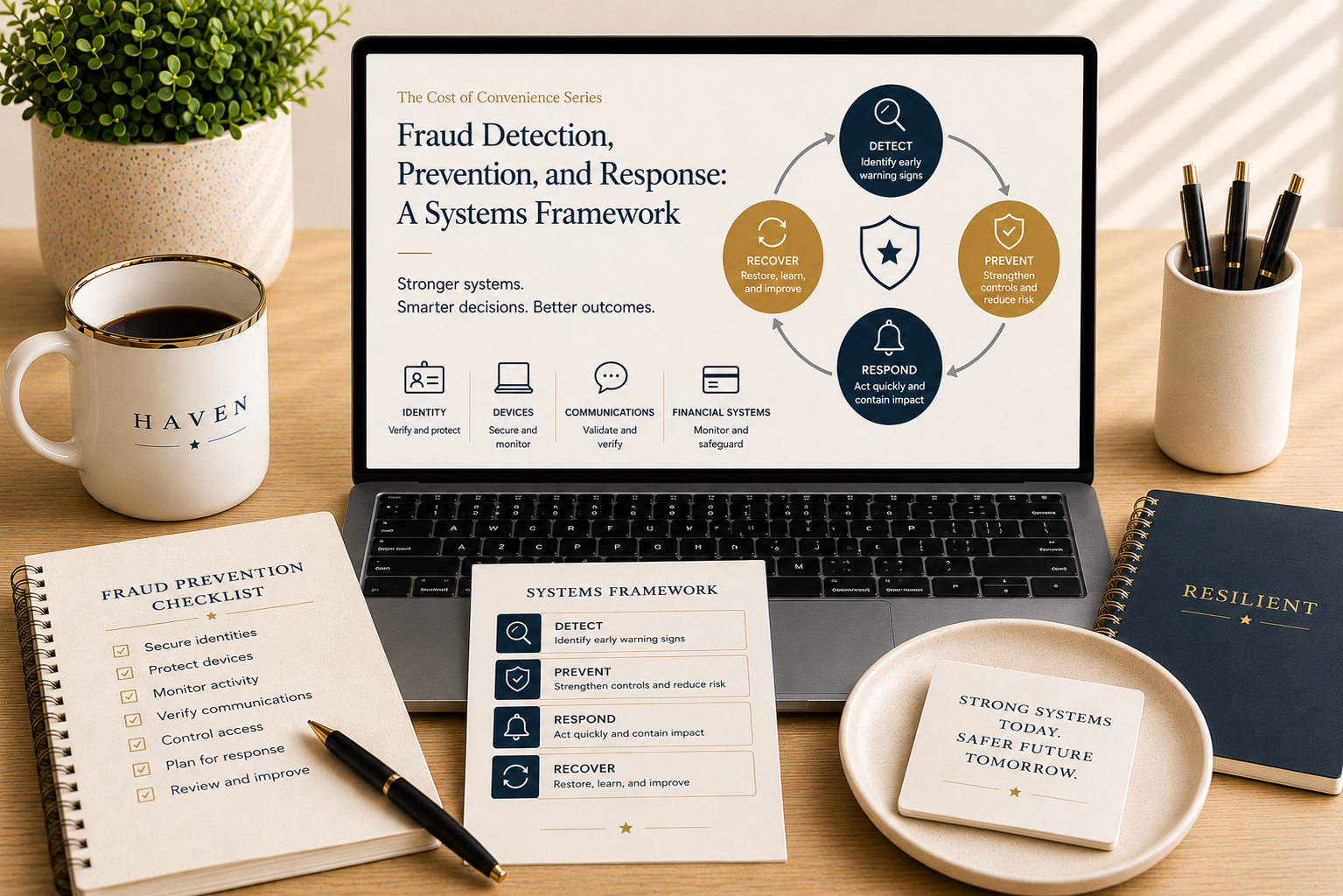
Fraud prevention is not a single tool or one-time action—it is a system. “The Cost of Convenience Series: Fraud Detection, Prevention, and Response: A Systems Framework” brings together the core ideas from the series into a unified, operational approach to managing risk in modern digital environments.
In this final webinar, Ashley Karr introduces a structured framework for detecting, preventing, and responding to fraud across identity, devices, communications, and financial systems. Participants will learn how to shift from reactive decision-making to intentional control, building layered protections that operate continuously rather than intermittently.
The session focuses on practical system design for both individuals and organizations, emphasizing visibility, preparedness, and response capability. From early detection signals to emergency response planning and recovery strategies, attendees will gain a clear model for maintaining resilience in increasingly complex and interconnected digital ecosystems.
Key Topics Discussed:
Building a layered fraud prevention system
Operational controls for identity, devices, and communications
Principles of fraud detection and behavioral monitoring
Structuring effective emergency response plans
Recovery processes and containment strategies
Long-term resilience and system maintenance
Moving from reactive to proactive security behavior
Integrating prevention across financial and digital systems
System-wide approach to reducing exposure and risk
This webinar includes:
Certificate of completion
No preparation required
Appropriate for all levels
1 year access
No prerequisites
What you will learn?
Explain fraud prevention as an integrated system rather than isolated tools or actions
Design layered operational controls to reduce exposure across identity, communication, and financial systems
Develop structured approaches for fraud detection, response, and recovery
Apply systems-based thinking to maintain long-term digital and operational resilience
Attend the webinar live or access the recording with a LearnFormula Unlimited Pass subscription.