

The Cost of Convenience Series: Payment Fraud: Old Methods, New Rails
As payment systems become faster and more seamless, the risks embedded within them become easier to overlook. “The Cost of Convenience Series: Payment Fraud: Old Methods, New Rails” explores how modern financial infrastructure has transformed the way money moves—and how fraud has evolved alongside it.

The Cost of Convenience Series: Credit Fraud, Synthetic Identity, and Financial Record Manipulation
As financial systems become increasingly digital and interconnected, identity fraud has evolved far beyond stolen credit cards and basic impersonation schemes. Today’s fraudsters exploit weaknesses across credit systems, synthetic identities, and fragmented financial records to bypass traditional safeguards and create long-term financial damage that can be difficult to detect or reverse.

The Cost of Convenience Series: Access Points: Devices, Networks, and SIM Swapping
Security breaches rarely begin with passwords alone—they begin with access. “The Cost of Convenience Series: Access Points: Devices, Networks, and SIM Swapping” explores the often-overlooked infrastructure that quietly enables account compromise in the modern digital world.

The Cost of Convenience Series: Social Engineering: Impersonation, Messaging, & Relationship Fraud
Most modern fraud does not start with sophisticated hacking tools — it starts with human interaction. From impersonation scams and business email compromise to romance fraud and manipulative messaging, social engineering exploits trust, urgency, familiarity, and emotional pressure to influence behavior without raising suspicion.
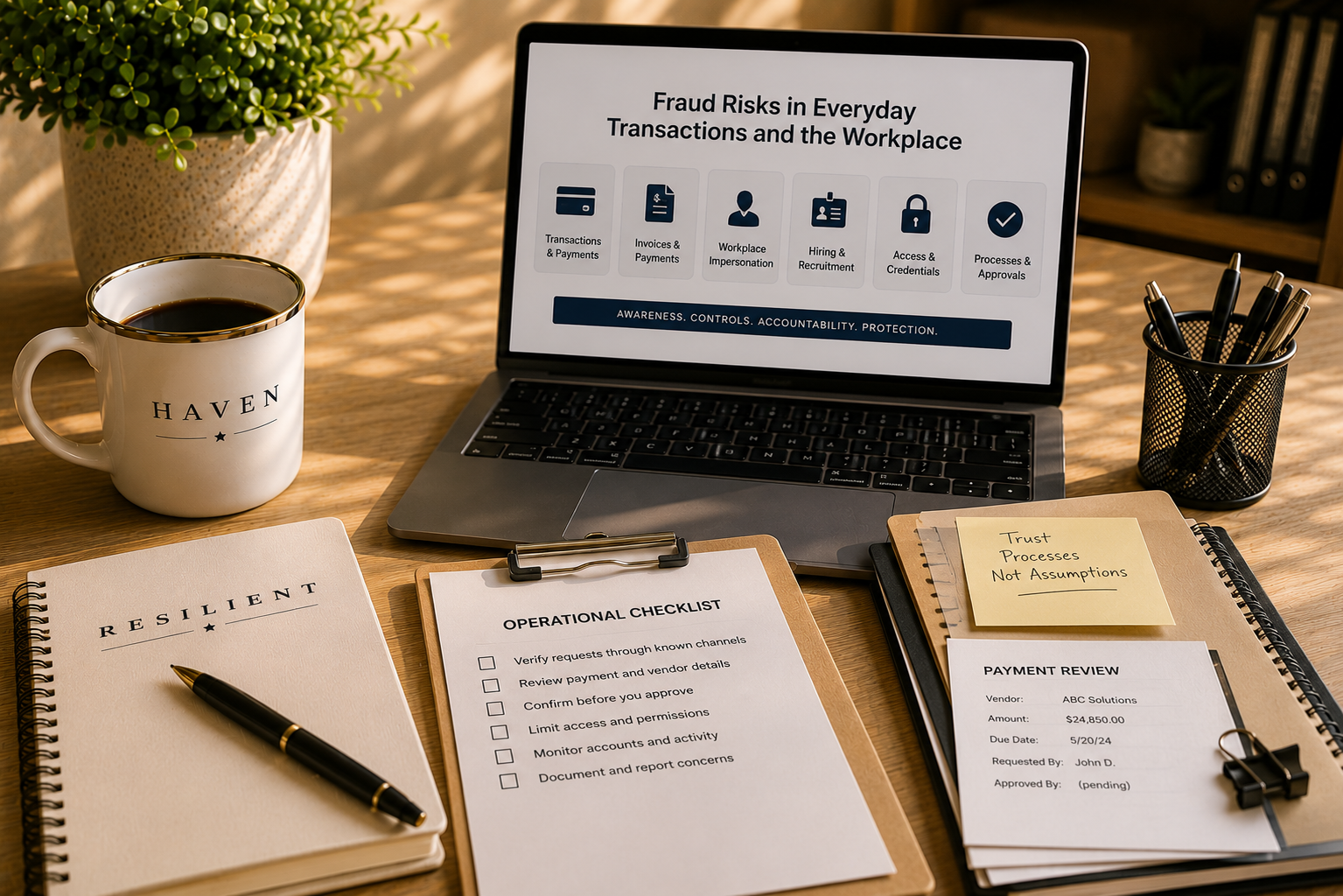
The Cost of Convenience Series: Fraud in Everyday Transactions and the Workplace
Fraud today rarely looks dramatic or obvious. Instead, it often hides inside routine transactions, workplace processes, customer interactions, hiring workflows, and everyday operational systems. As organizations and individuals move faster and rely more heavily on digital communication and shared systems, small procedural gaps can create significant opportunities for financial loss, identity compromise, and operational disruption.

The Cost of Convenience Series: AI, Deepfakes, and Emerging Fraud Vectors
Artificial intelligence is transforming fraud faster than most systems can adapt. “The Cost of Convenience Series: AI, Deepfakes, and Emerging Fraud Vectors” explores how modern AI technologies are reshaping the scale, speed, and sophistication of deception in digital environments.
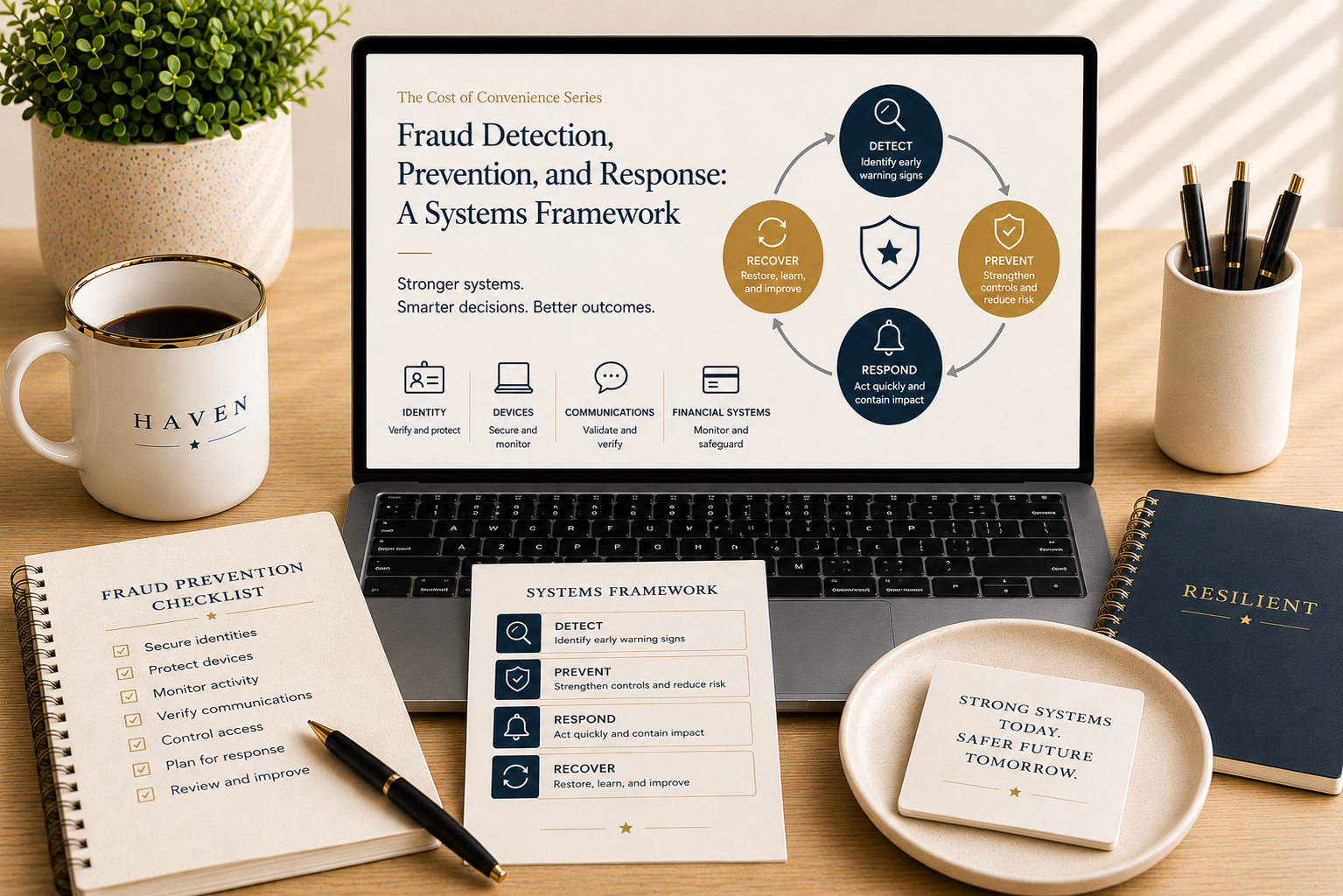
The Cost of Convenience Series: Fraud Detection, Prevention, and Response: A Systems Framework
Fraud prevention is not a single tool or one-time action—it is a system. “The Cost of Convenience Series: Fraud Detection, Prevention, and Response: A Systems Framework” brings together the core ideas from the series into a unified, operational approach to managing risk in modern digital environments.

The Cost of Convenience Series: Identity, Credentials, and the Digital Control Center
In a world where convenience drives nearly every digital interaction, security is often built on fragile assumptions. “The Cost of Convenience Series: Identity, Credentials, and the Digital Control Center” explores how modern identity is no longer defined by who we are, but by the systems that grant access to what we control.

The Cost of Convenience Series: How Fraud and Scams Actually Work: A Systems Perspective
Fraud today is no longer limited to obvious scams or suspicious emails. It is embedded into the speed, convenience, and trust structures of modern life. In this eye-opening session, we explore how fraud and scams actually operate—from first contact and trust-building to financial extraction and disappearance.