
About this webinar
Webinar in partnership with LearnFormula. Register here.
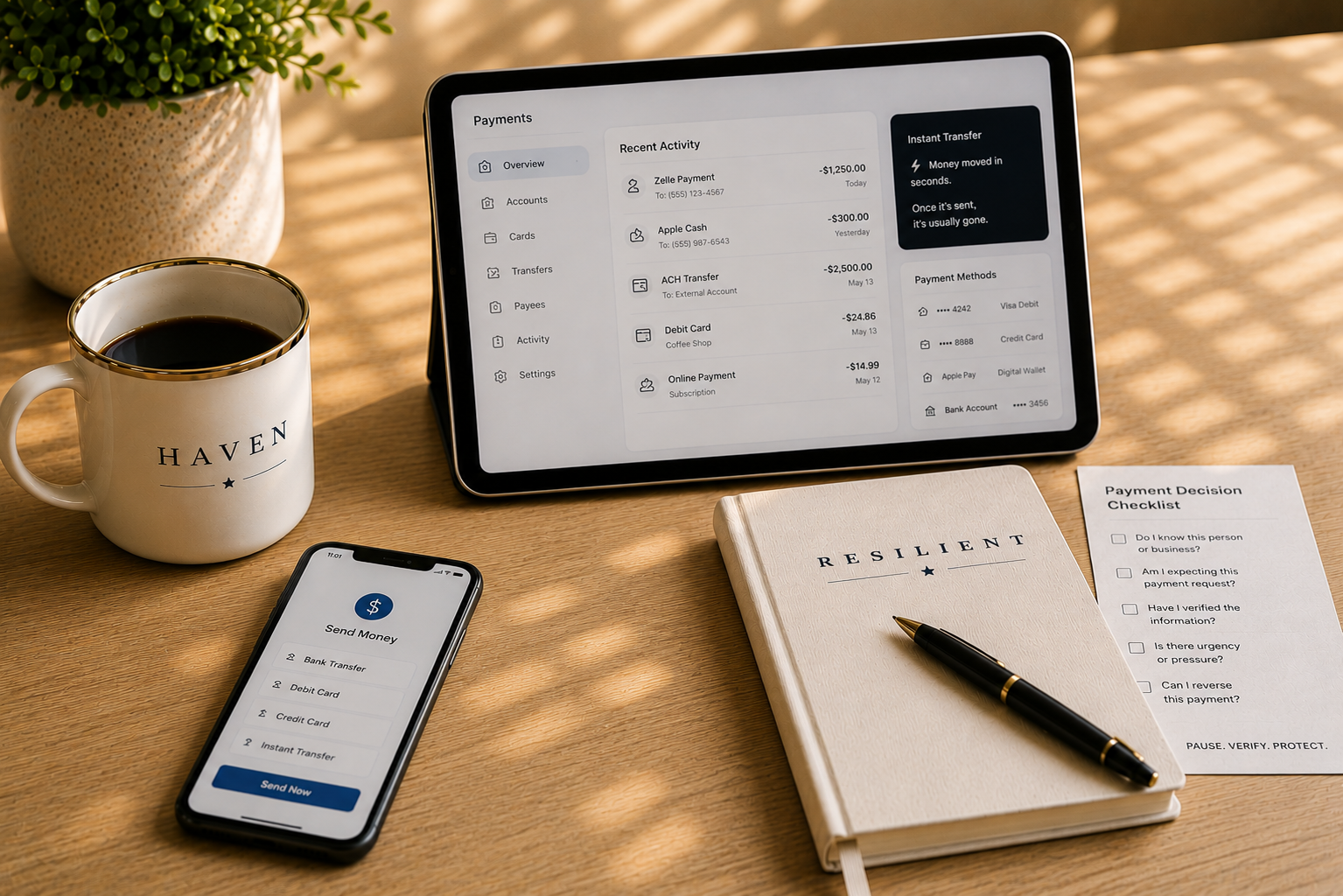
As payment systems become faster and more seamless, the risks embedded within them become easier to overlook. “The Cost of Convenience Series: Payment Fraud: Old Methods, New Rails” explores how modern financial infrastructure has transformed the way money moves—and how fraud has evolved alongside it.
In this webinar, Ashley Karr breaks down how digital wallets, peer-to-peer apps, ACH transfers, cards, wire systems, and instant payment rails are exploited by fraudsters who rely not on technical complexity, but on human behavior. Speed, urgency, trust, and familiarity are increasingly used as tools of manipulation, turning everyday transactions into opportunities for financial loss.
Participants will gain a clear understanding of how different payment systems operate, why certain transactions are harder to reverse than others, and how fraud strategies exploit both traditional banking rails and emerging fintech platforms. The session focuses on practical awareness—helping attendees recognize risk patterns and strengthen payment decision-making in real-world settings.
Key Topics Discussed:
Evolution of payment systems and fraud adaptation
Payment app fraud and impersonation scams
Authorized push payment fraud and social engineering tactics
Transaction manipulation and urgency-based deception
Risks associated with account linking and stored payment methods
Digital wallets and peer-to-peer platform vulnerabilities
Differences between authorized and unauthorized transactions
Why faster payment rails increase irreversibility of fraud
Behavioral triggers exploited in financial decision-making
This webinar includes:
Certificate of completion
No preparation required
Appropriate for all levels
1 year access
No prerequisites
What you will learn?
Describe how modern payment systems differ in structure, speed, and fraud exposure
Identify common fraud techniques used across digital wallets, payment apps, and banking rails
Distinguish between authorized and unauthorized transactions and their implications for recovery
Apply practical strategies to reduce exposure to payment fraud in everyday financial behavior
Attend the webinar live or access the recording with a LearnFormula Unlimited Pass subscription.