
About this webinar
Webinar in partnership with LearnFormula. Register here.
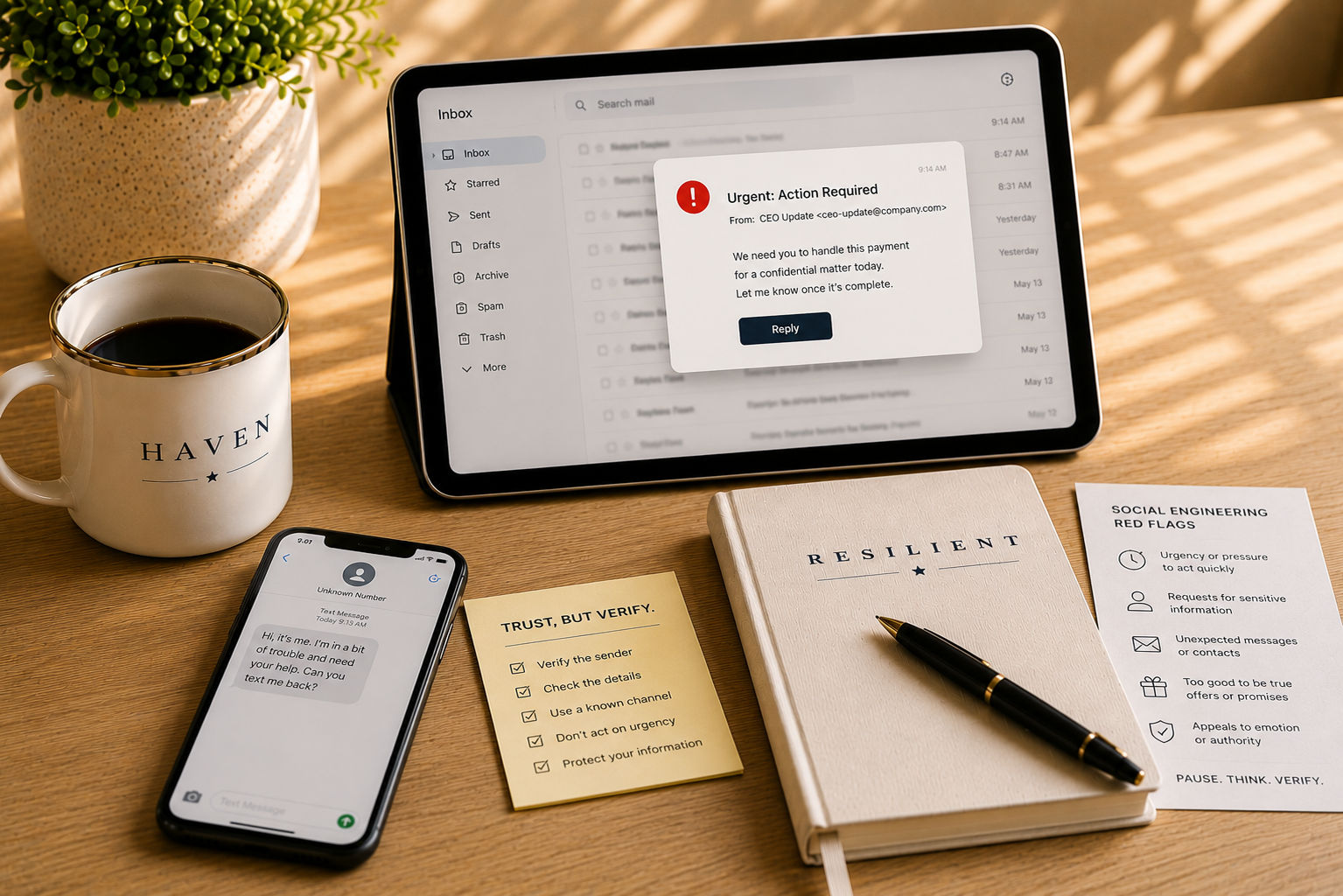
Most modern fraud does not start with sophisticated hacking tools — it starts with human interaction. From impersonation scams and business email compromise to romance fraud and manipulative messaging, social engineering exploits trust, urgency, familiarity, and emotional pressure to influence behavior without raising suspicion.
In this engaging and practical session, Ashley Karr examines how social engineering tactics operate across digital communication channels including texts, emails, phone calls, social media, dating platforms, workplaces, and personal relationships. Attendees will learn how fraudsters strategically engineer trust and manipulate decision-making within environments designed for speed and constant responsiveness. The webinar also provides practical behavioral safeguards that help individuals and organizations reduce risk while maintaining normal communication habits in an increasingly connected world.
Key Topics Discussed:
Social engineering principles and behavioral manipulation
Impersonation scams and identity-based deception
Business email compromise (BEC) schemes
Relationship and romance fraud tactics
Messaging manipulation across digital platforms
Emotional pressure, urgency, and authority exploitation
Trust engineering within workplace and personal communications
Fraud risks across texts, calls, emails, and social media
Contextual alignment and familiarity as manipulation tools
Behavioral guardrails for reducing fraud exposure
Human psychology and communication vulnerabilities in fraud
This webinar includes:
Certificate of completion
No preparation required
Appropriate for all levels
1 year access
No prerequisites
What you will learn?
Identify common social engineering tactics used across digital communication channels.
Recognize manipulation techniques involving urgency, authority, and emotional pressure.
Assess fraud risks associated with impersonation, messaging, and relationship-based scams.
Apply practical behavioral safeguards to reduce exposure to social engineering attacks.
Attend the webinar live or access the recording with a LearnFormula Unlimited Pass subscription.