
Digital Decluttering Is an Activity. Digital Life Management Is the System.
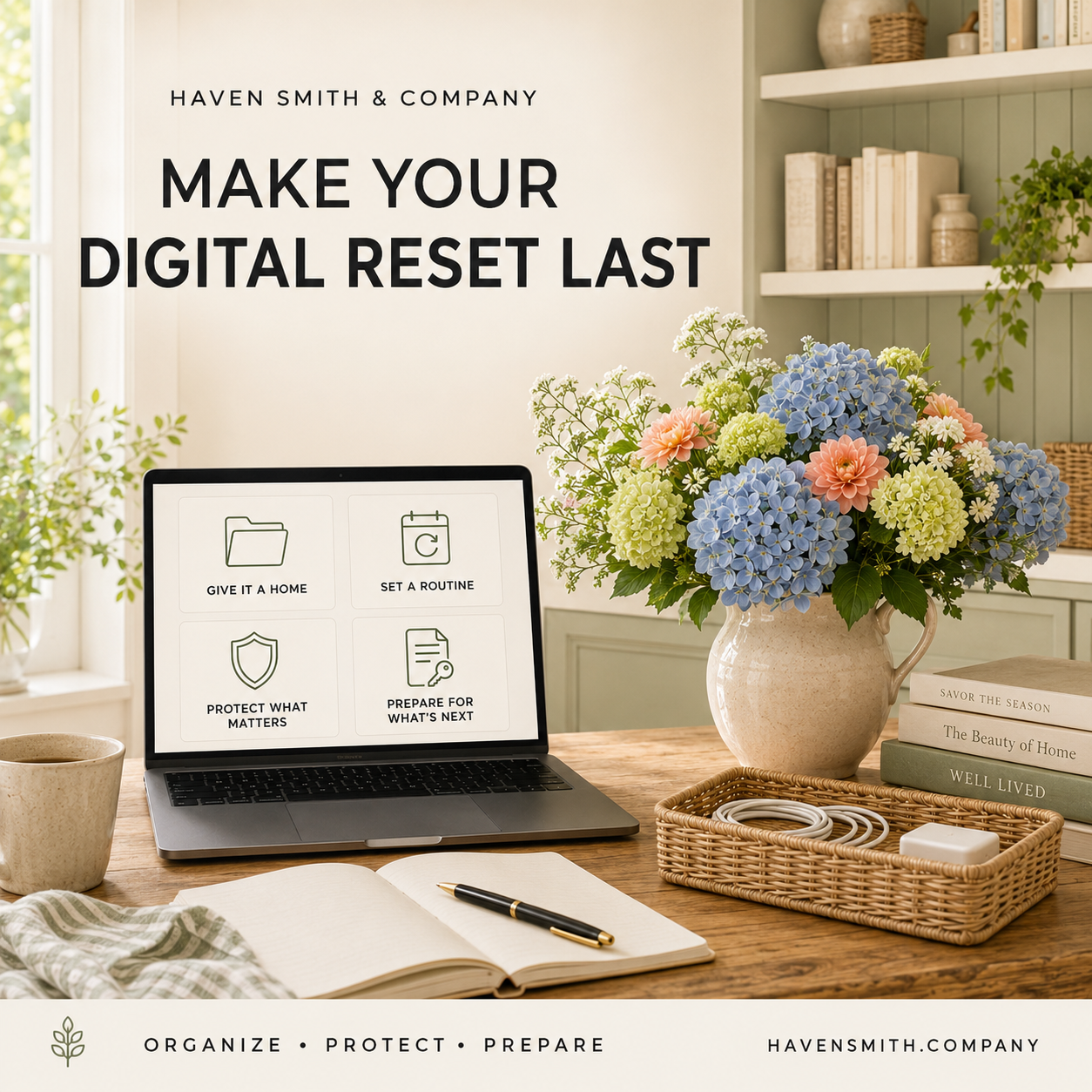
Digital clutter is a symptom. The lasting solution is a system for deciding where information belongs, how it is protected, and what happens when someone else needs it.
Deleting old screenshots, emptying your Downloads folder, and clearing files from your desktop can provide immediate relief. Those activities are useful—but they do not necessarily prevent the clutter from returning.
Digital decluttering removes what has accumulated. Digital Life Management creates a practical system for organizing, protecting, maintaining, and preparing the digital information your life depends on.
If You Read Only One Thing
Digital decluttering removes accumulated mess. Digital Life Management changes the system that allowed it to accumulate—and makes sure what matters is organized, protected, and available when it is needed.
Your Action Steps
Choose one place where digital clutter repeatedly accumulates: your Downloads folder, email attachments, screenshots, scanned documents, photographs, or desktop.
Then answer four questions:
What do I have?
Identify what is useful, important, sensitive, outdated, or disposable.Where does it belong?
Give useful information one consistent and logical home.How is it protected?
Consider backups, account access, recovery options, passwords, and sensitive information.Who could find or manage it if necessary?
Document enough information for a trusted person to help during an emergency, incapacity, or death.
You do not need to reorganize your entire digital life today. Install one useful rule where you currently experience the most friction.
Digital Decluttering Provides Relief—but Not a System
Digital decluttering is the process of removing digital material you no longer need. It might include:
Deleting duplicate photographs
Unsubscribing from unwanted emails
Removing old applications
Clearing screenshots
Emptying the Downloads folder
Archiving completed projects
Closing unused accounts
Each of those activities can make your digital life feel lighter and more manageable.
The problem is that clutter often returns because the underlying decisions have not changed. If you delete 500 files from your Downloads folder but never decide where future downloads should go, the folder will eventually fill up again.
The cleanup was successful. The system was never created.
A System Reduces Repeated Decisions
A functional digital organization system does not need to be complicated. It gives you a default answer when new information enters your life.
For example:
Receipts are saved in one designated location.
Medical records go into the same folder structure every time.
Important email attachments are saved instead of being left inside the inbox.
Downloads are reviewed every Friday.
Screenshots are deleted after they have served their purpose.
Essential files are included in a backup system.
Outdated drafts are removed when a project is completed.
These rules eliminate the need to make the same organizational decision repeatedly. They also make short maintenance sessions much more effective because you already know what should happen to each item.
The objective is not to create the perfect collection of folders. It is to make useful information easier to save, find, protect, and eventually manage.
Digital Life Management Goes Beyond Organization
A beautifully organized folder can still be vulnerable.
Its contents may exist on only one device. The device may not be protected adequately. The account recovery information may be outdated. A family member may not know that the folder exists—or may not understand what it contains.
That is why Digital Life Management extends beyond decluttering and organization.
A sustainable system considers four connected responsibilities:
Organization
Can you find the files, records, accounts, and information you regularly need?
Protection
Are important accounts and devices secured? Are sensitive records handled appropriately? Do essential files have reliable backups?
Maintenance
Do you have a realistic routine for reviewing what accumulates, correcting outdated information, and removing what is no longer useful?
Preparation
Could a trusted person locate and understand essential information if you became unavailable or needed help?
These responsibilities do not require one massive project. They can be improved gradually through small, repeatable decisions.
Build the System Where the Friction Is
You do not need to design a comprehensive folder structure before you can make progress. Start with a problem you encounter repeatedly.
If important documents stay in Downloads because you do not know where to put them, create one permanent home for important personal records.
If screenshots accumulate faster than you can review them, choose a weekly time to process them. Save the few that remain useful and delete the rest.
If documents are scattered across several devices and cloud services, decide which location will serve as the primary home for each category.
If your family would not know where to find critical information, begin a simple inventory of the accounts, devices, records, and instructions they might eventually need. Do not include passwords in an unsecured document; begin by documenting what exists and where the appropriate information is maintained.
One clear rule in a place of recurring frustration is more useful than an elaborate system you cannot maintain.
Organization Is Not the Same as Preservation
Important digital information also needs to remain usable over time.
The National Archives recommends using structured directories, meaningful file information, regular review, and multiple copies stored on different types of media. It also cautions against depending exclusively on one cloud service as the only storage location.
You do not need to apply archival standards to every screenshot or grocery receipt. But family photographs, legal documents, financial records, creative work, and other irreplaceable files deserve more than a tidy folder on one computer.
Decluttering asks, “Do I still need this?”
Digital Life Management also asks:
Can I find it?
Can I open it?
Is it protected?
Is there another copy?
Will it still make sense later?
Could someone else locate it if necessary?
Progress Is the Goal—not Digital Perfection
A manageable digital life is not one without email, screenshots, downloads, forgotten photographs, or unfinished organizational work.
It is one in which useful information has a home, accumulated material is reviewed regularly, important records are protected, and essential responsibilities are not trapped inside one person’s memory.
You do not need to organize everything at once.
Choose one recurring source of digital clutter. Give useful items a home. Decide when that location will be reviewed. Protect what matters. Then move to the next point of friction.
That is how digital decluttering becomes Digital Life Management.
Resources Outside Haven Smith & Company
Digitizing Family Papers and Photographs — National Archives guidance on file naming, metadata, digitization, and backing up important family materials.
Ensuring Digital Files Will Be Usable in the Future — National Archives guidance on structured directories, multiple copies, storage, and long-term usability.
Haven Smith & Company Resources
Free Digital Organization Guide and additional resources:
https://www.havensmith.company/start-hereDigital Organization Course:
https://www.havensmith.company/digital-organizationDigital Life Management Course Bundle:
https://www.havensmith.company/bundleBook a free 15-minute consultation:
https://www.havensmith.company/free-consultation
Haven Smith & Company provides practical education, tools, and guidance to help individuals, families, professionals, businesses, and institutions organize, protect, and prepare their digital lives with confidence.