
Organize With Me: Reset Your Computer Desktop Without Creating Another Junk Folder
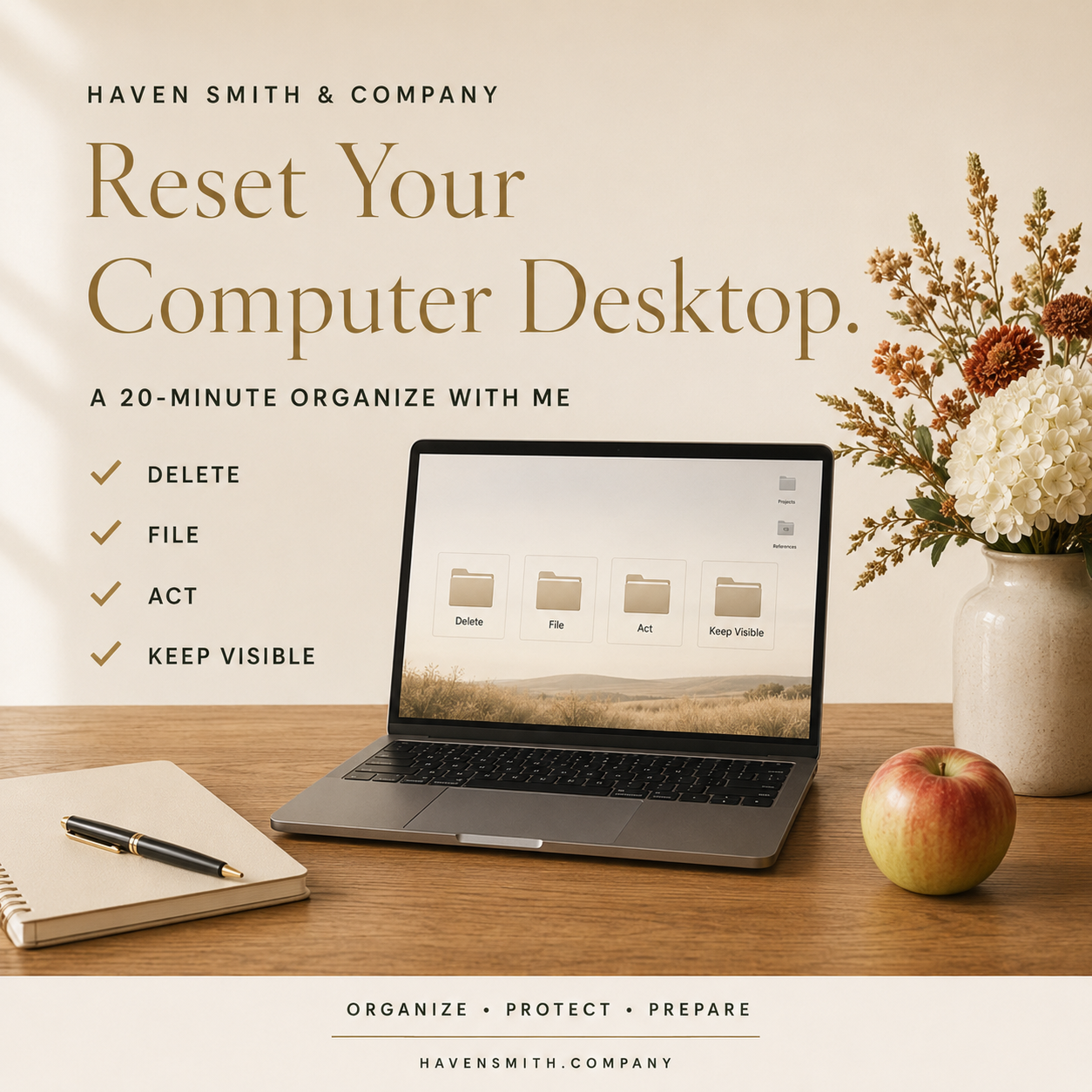
A 20-minute reset can give visible files real homes while keeping current work easy to reach.
A crowded computer desktop creates a peculiar kind of stress. Every time you open the computer, you see unfinished work, downloaded documents, duplicate images, screenshots, installers, and files you no longer recognize.
The usual response is to select everything and place it inside a folder called “Desktop Cleanup,” “Sort Later,” or “Old Desktop.”
The screen looks better, but the information is no more organized than it was before.
A useful desktop reset does more than hide the pile. It makes a decision about every item and leaves only the files that genuinely require your current attention.
If You Read Only One Thing
A clean desktop is not the goal. The goal is knowing where every important file belongs after it leaves the desktop.
Your Action Steps
Set a timer for 20 minutes and work through these steps:
Open the folders where your files should normally live.
Delete obvious trash, duplicates, installers, and obsolete screenshots.
File important records in their permanent homes.
Move current work into one clearly named action folder.
Leave no more than five genuinely active items on the desktop.
Review the Trash or Recycle Bin before emptying it.
Schedule a five-minute desktop review each week.
Why Your Desktop Becomes a Digital Pile
The desktop is convenient. It is visible, quick to reach, and available every time you save or download something.
That makes it useful for temporary work—but a poor permanent filing system.
A typical desktop gradually accumulates:
Email attachments
PDFs downloaded for one task
Screenshots
Images copied from websites
Application installers
Drafts with unclear names
Documents waiting to be filed
Shortcuts to applications and websites
Files that were supposed to be temporary
The problem is not that you used the desktop. The problem is that temporary storage quietly became permanent storage.
Do Not Begin by Creating Another Holding Folder
A folder called “Desktop Cleanup” feels productive because it produces immediate visual relief.
However, unless you have a specific plan and deadline for reviewing that folder, it becomes another digital junk drawer. Months later, you may create “Desktop Cleanup 2” and move the original folder inside it.
Instead, open the real locations where information belongs before you begin.
Depending on your system, those might include:
Financial
Home
Family
Health
Education
Work
Estate Planning
Photographs
Current Projects
You do not need to redesign your entire filing system today. You need enough established destinations to make useful decisions.
Use Four Decisions
Work through the desktop using four categories.
1. Delete
Delete information you no longer need, including:
Duplicate downloads
Obsolete installers
Screenshots used for a completed task
Empty documents
Accidental copies
Outdated exports
Images you can easily obtain again
Do not spend several minutes studying a file that you already know is disposable.
2. File
Move records and reference materials to their permanent homes.
Examples include:
Insurance documents
School records
Receipts
Medical information
Tax documents
Contracts
Family photographs
Instructions you expect to use again
If the filename is unclear, rename the file before moving it. A file called scan0047.pdf will remain difficult to recognize after it reaches the correct folder.
3. Act
Some files represent unfinished responsibilities.
Examples might include:
A form that must be completed
A document someone needs you to review
A bill that requires attention
A file that must be uploaded
A letter you are drafting
Move these items into one clearly named action folder, such as:
Current Action — Review Weekly
This is different from a “sort later” folder. Every item in the action folder should represent a defined task, and the folder should have a regular review schedule.
4. Keep Visible Temporarily
A small number of files may remain on the desktop because you are actively using them.
“Actively” should mean that you expect to use the file within the next several days—not that you might remember it eventually.
Try to keep no more than five active items visible.
Be Careful With Synchronized Desktops
Your desktop may be synchronized through iCloud, OneDrive, or another cloud service. Moving or deleting an item can therefore affect how it appears on other devices.
Before making large changes:
Confirm which account is synchronizing the desktop.
Allow any current synchronization to finish.
Move files deliberately into established locations.
Check the service’s Trash, Recycle Bin, or recovery options if something appears to be missing.
Apple’s Stacks feature can group desktop files by type, date, or tag. This can make the desktop easier to review, but it does not decide what should be preserved or where information permanently belongs. Apple explains Desktop Stacks here.
Windows users can organize and move information through File Explorer, including files maintained locally and in connected cloud services. Microsoft’s File Explorer guidance.
Finish the Reset
When the timer ends:
Review the remaining desktop items.
Confirm that important files open from their new locations.
Review the Trash or Recycle Bin.
Empty it only when you are comfortable with what was removed.
Add a recurring five-minute desktop review to your calendar.
The goal is not a perfectly empty screen. The goal is a desktop that supports your work without becoming the place where information disappears in plain sight.
Resources Outside Haven Smith & Company
Haven Smith & Company Resources
Digital Organization Course:
https://www.havensmith.company/digital-organizationDigital Life Management Course Bundle:
https://www.havensmith.company/bundleFree Digital Life Management resources:
https://www.havensmith.company/start-hereBook a free 15-minute consultation:
https://www.havensmith.company/free-consultation