

What’s inside
One written record of every account you hold.
NordPass, a password manager, surveyed its own customers this April and found they averaged 120 personal logins each. Those are people organized enough to pay for a password manager. Almost none of them have the list written down anywhere.
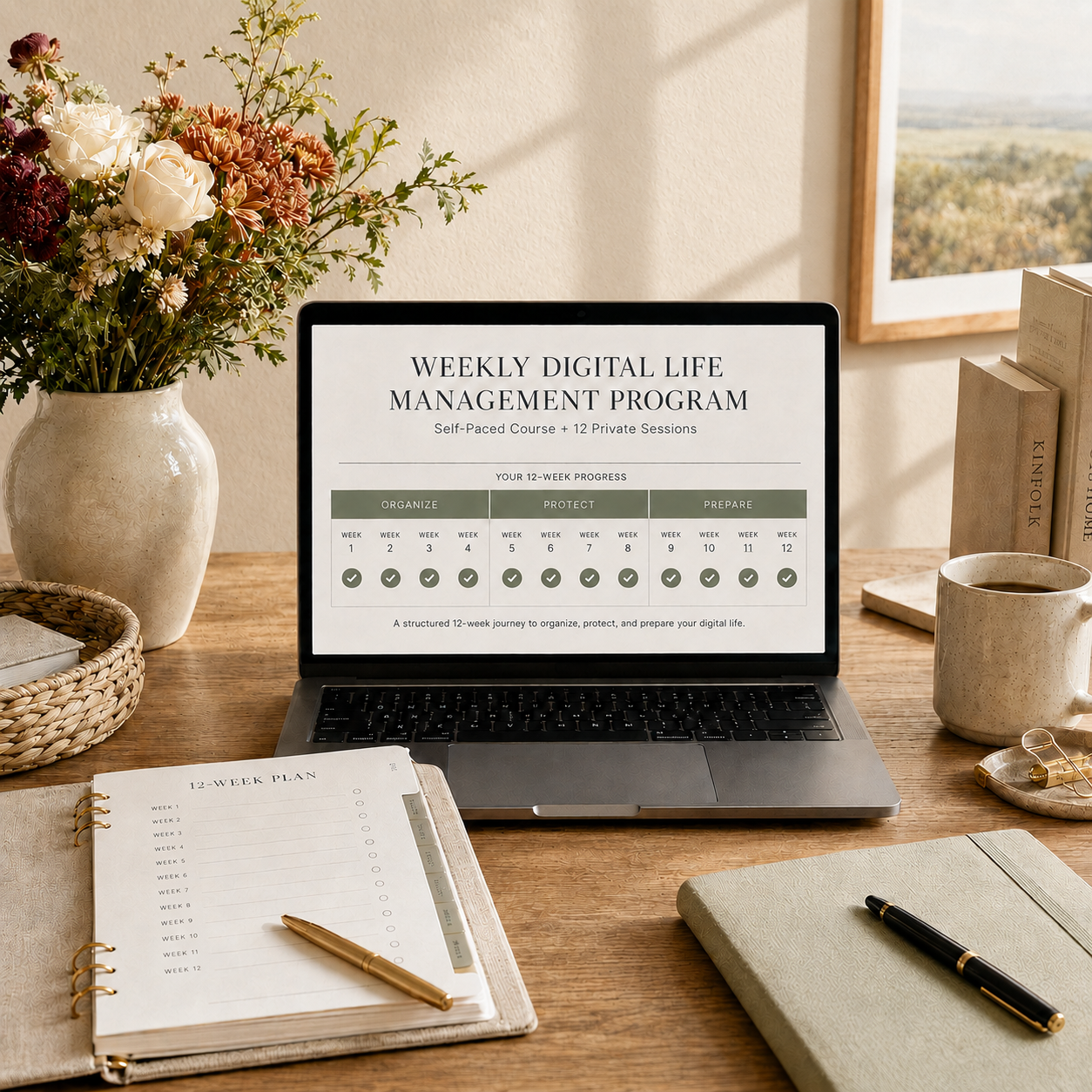
Each week works the same way. You find what you have. You close what you no longer use. Then you write down what’s left. Doing it in that order is what keeps the record short enough to still be true a year from now.
Week One
Email and Accounts
Email comes first, because every other account resets through it. Then you set up a password manager, using a shortcut that pulls in the passwords your browsers have been saving for years. That builds most of your inventory in about ten minutes, and you don’t have to remember anything to do it.
Week Two
Money
You go through checking, savings, cards, retirement, and everything that renews on its own. Most people find at least one charge for something they stopped using a long time ago.
Week Three
Files and Photos
You find where your documents and photographs really live, which is usually two computers, a phone, an old drive in a drawer, and a cloud account or two.
Week Four
Devices and People
You list the devices that hold your data, and the people who can reach that data: a spouse, a parent you help, an adult child, a business partner, an assistant.
Also included
There’s a chapter on tracking down accounts you can’t remember, a yearly review that keeps the record true, a reference appendix, and a one-page checklist for the end of the month.
Before you buy
Questions
What exactly do I get?
A 54-page PDF. The download link appears on screen as soon as you pay, and it arrives by email as well. No account, no login, no app. It’s yours to keep and print.
Do I have to remember every account I’ve ever opened?
No, and nobody could. Week One shows you how to pull in the accounts your browsers have been saving for years, which builds most of the list in about ten minutes. After that, the work is deciding what to keep, what to close, and what to move into your password manager.
What if I’m starting from nothing?
That’s the normal starting point. Week One assumes no system at all and builds outward from your email address.
What if I’ve already done some of this?
Then you’ll move faster. Bring what you have to Week One and the book will show you what’s missing. For people who have already started, the gap is usually money or devices rather than accounts.
I’ve bought guides like this before and they didn’t stick. Why is this different?
Because it ends. It runs four weeks, one area each week, at about two hours a week, in an order that’s already decided for you. There’s a checklist at the end so you can see you’re finished, and a yearly review so the record stays true without starting over.
Is this a digital detox?
No. Nothing here asks you to delete apps or spend less time on your phone. The goal is knowing what you own online, not spending less time online.
How technical do I need to be?
Not very. If you use email and a web browser, you can do all of this work. Nothing asks you to install unfamiliar software or change a setting you don’t understand.
Do I need the Workbook as well?
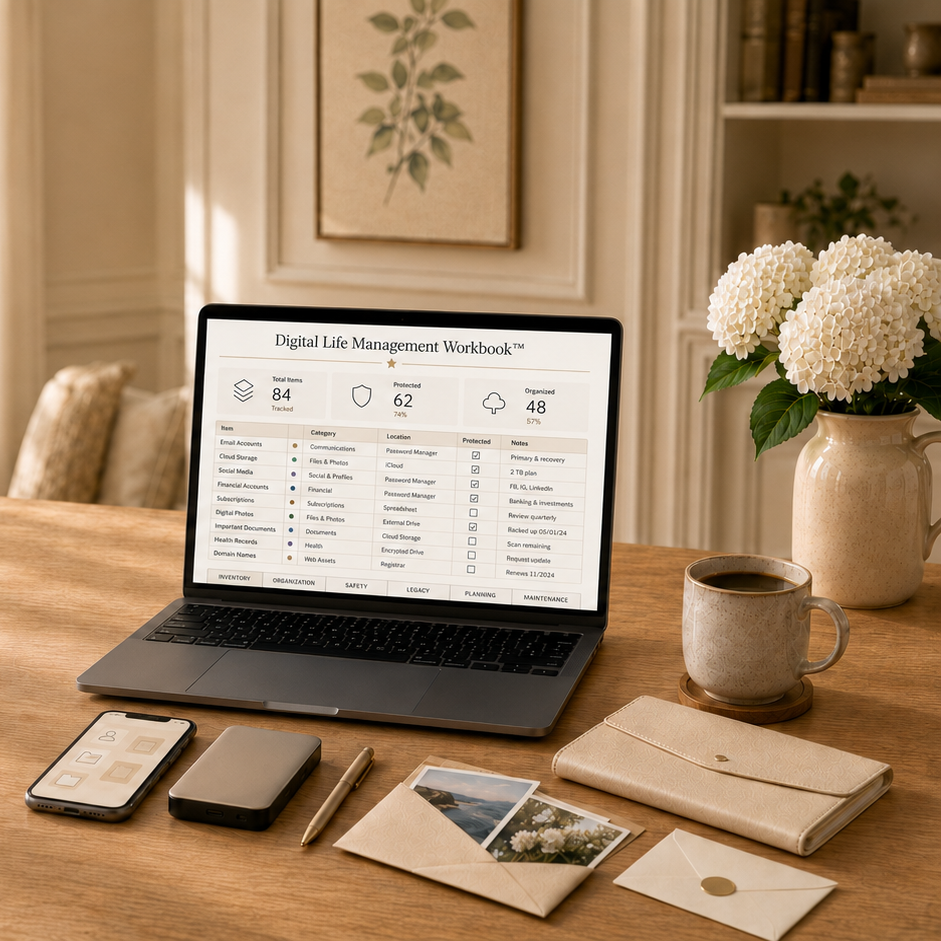
No. The book tells you what to record, and a notebook or a plain spreadsheet will hold what you write. If that’s where you want to start, start there. It’s a real beginning and it will work.
What we recommend is the whole system. The Workbook is already built and its columns are already decided, so your two hours go into filling it in rather than designing it. The three months are written to be done in order, each one resting on the one before. The System bundle is $179 for all three months plus the Workbook and the Emergency Information Record, which is the printed document that holds the few things too sensitive to keep in any file. Bought separately, those five come to $255.
Can I get a refund?
Digital downloads are final sale. Once the file has been delivered there’s no way to return it, and this is a small business protecting work that took thousands of hours to make. If your download doesn’t arrive, or the file won’t open, reply to your receipt and we’ll sort it out.
If you read the whole thing and think it was worthless, write and tell us. That sits outside our policy and we don’t make a habit of it, but we’re not going to argue with you about a PDF.