
Can Your Family Inherit Your Ebooks, Movies, and Other Digital Purchases?
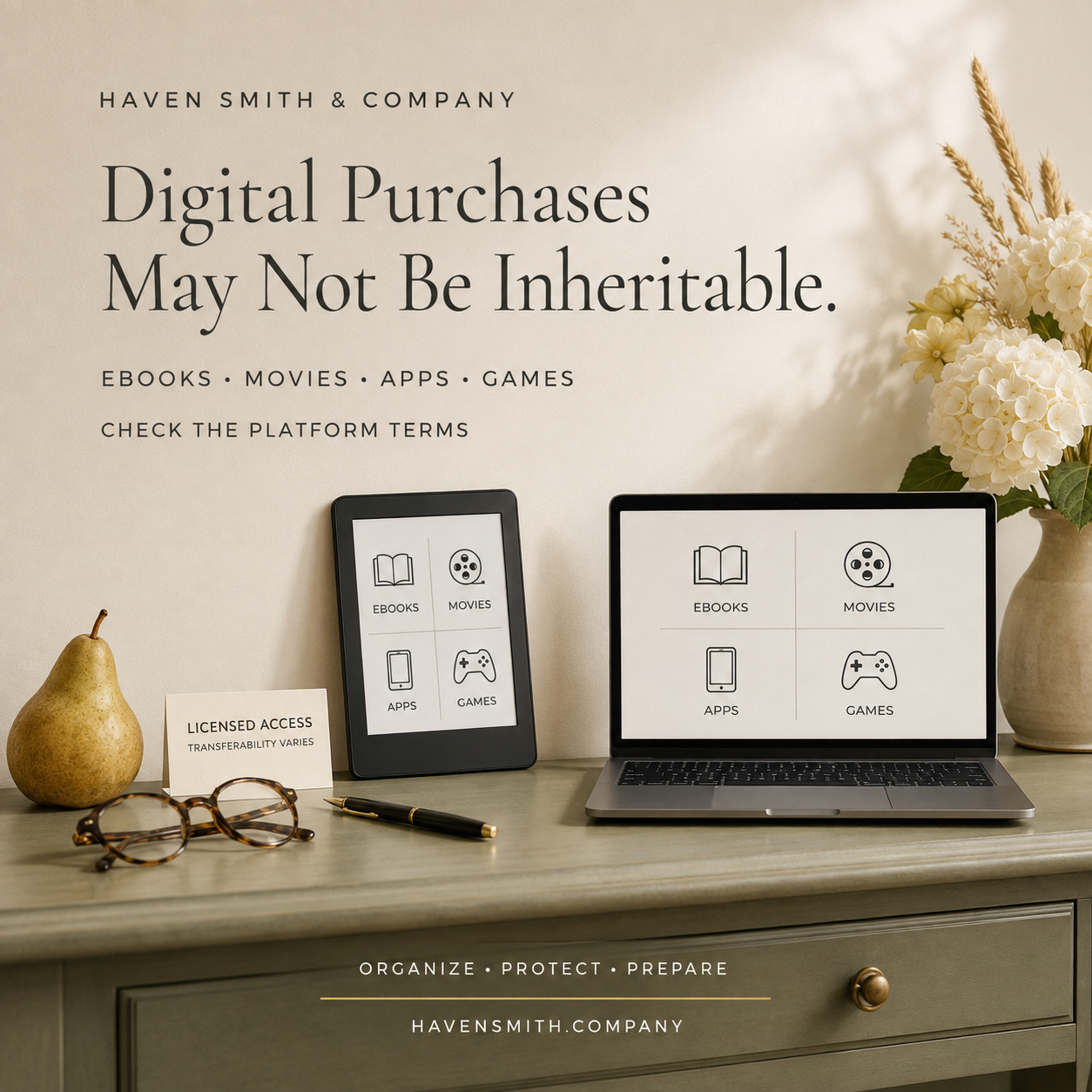
Paying for digital content does not always mean you own something that can be transferred through your estate.
Over time, a digital library can feel as personal and substantial as the books, records and films collected on a shelf.
It may include thousands of dollars in ebooks, audiobooks, movies, music, applications, games, subscriptions and other content. Family members may use some of it through household or family-sharing features. The account owner may reasonably assume that the collection can eventually pass to someone else.
That assumption is often wrong.
Many digital transactions provide a personal license to access content through a specific account. They do not necessarily provide a transferable asset that can be left to another person through a will.
If You Read Only One Thing
The word “buy” does not guarantee that a digital purchase can be inherited. Platform terms, licensing restrictions and account settings determine what may be accessed, shared or transferred.
Your Action Steps
Inventory the platforms where you maintain purchased digital content.
Identify whether the content is licensed, independently owned or eligible for family sharing.
Review each platform’s current legacy, inactivity and household-sharing tools.
Record which purchases or subscriptions matter to your family or business.
Preserve independently owned files in an organized, backed-up location.
Document your wishes without placing passwords inside an unsecured plan.
Ask a qualified estate-planning attorney how digital property and account authority should be addressed in your documents.
Digital Access Is Not the Same as Ownership
When you purchase a printed book, you generally own that physical copy. You can give it away, sell it or leave it to someone in your estate.
Digital content commonly works differently.
Amazon’s Kindle Store terms state that Kindle content is licensed, not sold. Google Play grants a non-exclusive right to use purchased content for personal, non-commercial purposes and restricts transfers except where specifically permitted. Other platforms use their own terms, formats and technical controls.
The transaction may feel like a purchase, but the legal and practical result can be closer to long-term personal access.
Apple Legacy Contact Does Not Include Purchased Media
Apple Legacy Contact is a valuable tool for requesting certain Apple Account data after the account owner dies. Eligible information may include photographs, messages, notes, files and device backups.
Apple specifically excludes movies, music, books and subscriptions purchased through the Apple Account. It also excludes passwords, passkeys and payment information stored in iCloud Keychain.
Naming a Legacy Contact therefore does not transfer an Apple media library or provide a complete digital inheritance solution.
Family Sharing Is Not Inheritance
Family-sharing systems can allow eligible purchases and subscriptions to be used by other household members during the account owner’s life. Apple Family Sharing, for example, can share certain applications, music, movies, television programs and books.
That arrangement does not necessarily create independent ownership for every family member. Access can change when the family group, payment arrangement, account status or platform policy changes.
Treat family sharing as a current access feature—not proof that the content will remain available after the original purchaser’s death.
Some Digital Files May Be Transferable
Not all digital content is locked to a platform account.
You may have:
DRM-free ebooks or music files
Photographs and videos you created
Original writing, artwork or designs
Software licenses with express transfer rights
Website domains
Cryptocurrency
Downloaded business records
Intellectual property that produces income
These items may involve ownership rights that differ substantially from access to a consumer media library. They should be inventoried separately, stored appropriately and reviewed with professional advisors when they have financial, business or personal value.
What to Include in Your Digital Estate Inventory
For each platform, record:
Platform or service name
Type of content maintained there
Whether the content is purchased, subscribed to or independently owned
Family- or household-sharing settings
Approximate financial or personal significance
Current legacy or inactivity setting
What should be preserved, canceled or reviewed
Who should be responsible
Do not copy passwords directly into the inventory. Instead, document how the properly authorized person can use your secure access and recovery process.
Think Before Giving Digital Content as a Gift
The approaching gift season makes this distinction especially useful.
Before giving an ebook, game, application, subscription or other digital content, determine:
Which account will own the license
Whether the content can be shared
Whether the recipient needs a specific device or platform
Whether the gift expires
Whether the content remains available if a subscription ends
A physical book and a licensed ebook may deliver the same story, but they do not create the same ownership or legacy outcome.
Platform Settings and Legal Documents Must Work Together
Digital access may be affected by contracts, state law, privacy law, platform tools and estate-planning documents. The Revised Uniform Fiduciary Access to Digital Assets Act addresses fiduciary access to online accounts in many states, but access to electronic communications and licensed content can still be restricted.
Haven Smith & Company provides education, inventories and practical planning support. Consult a qualified attorney for legal advice about digital property, fiduciary authority, electronic communications and estate documents.
Resources Outside Haven Smith & Company
Haven Smith & Company Resources
Free Digital Life Management resources:
https://www.havensmith.company/start-hereDigital Legacy & Estate Planning Course:
https://www.havensmith.company/digital-legacy-estate-planningDigital Life Management Course Bundle:
https://www.havensmith.company/bundleBook a free 15-minute consultation:
https://www.havensmith.company/free-consultation
Haven Smith & Company provides practical education, tools, and guidance to help individuals, families, professionals, businesses, and institutions organize, protect, and prepare their digital lives with confidence.