
Welcome to the Digital Life Management System™
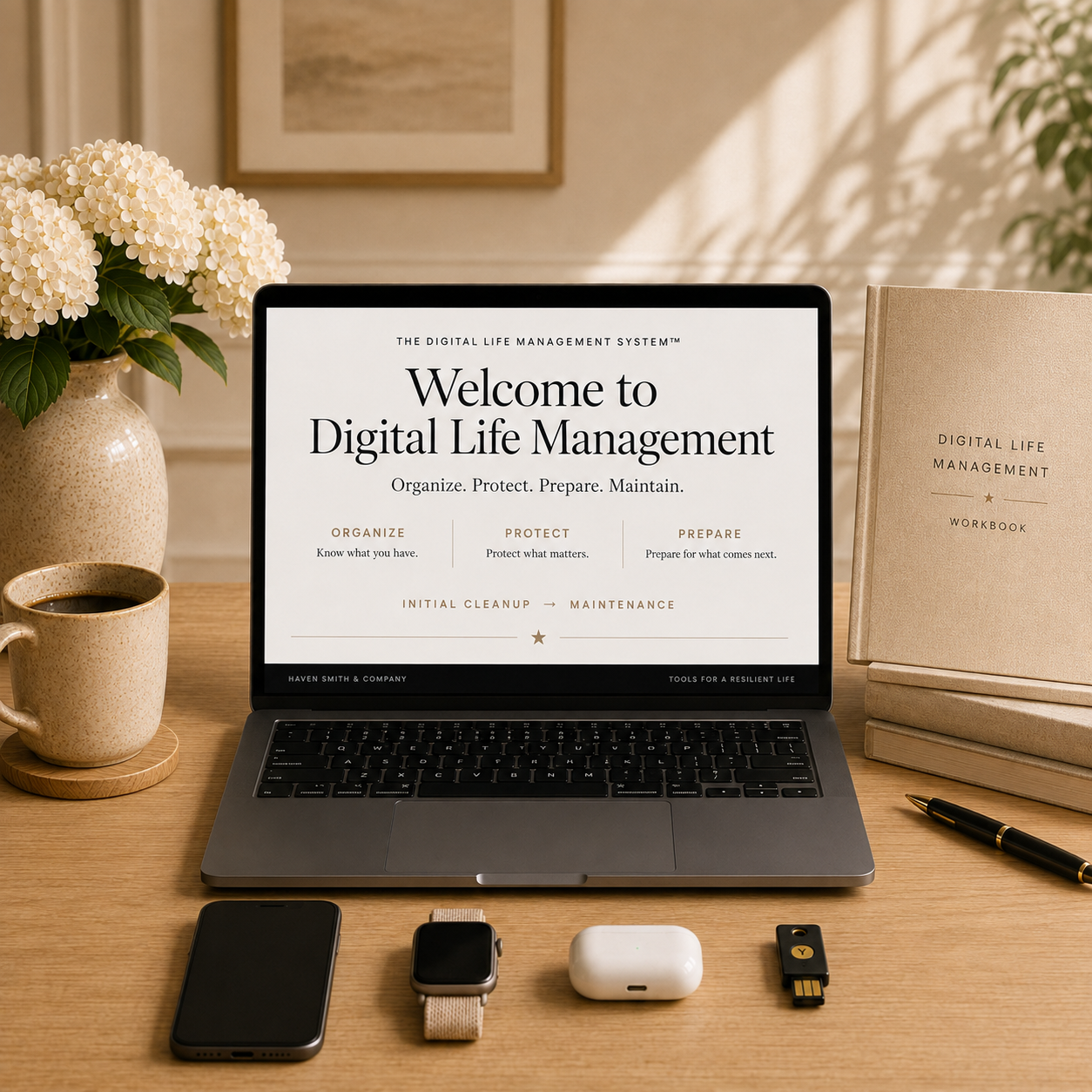
One practical framework for organizing, protecting, preparing, and maintaining your digital life.
Modern life does not exist in one place.
It is spread across email accounts, financial platforms, healthcare portals, personal devices, workplace tools, cloud storage, applications, subscriptions, photographs, business records, and years of accumulated information. Each account or service may provide instructions for using its own features. A bank can explain online banking. A healthcare provider can explain its patient portal. A phone company can explain how to activate a device. A software company can explain how to use an application.
Very few explain how all of those accounts, devices, records, and responsibilities should be managed together.
The individual is left to decide what matters, where information belongs, which accounts deserve greater protection, what another person may eventually need, and how everything will remain current.
That is why Haven Smith & Company created the Digital Life Management System™.
Your Digital Life Is Part of Your Real Life
Your digital life is the collection of accounts, records, devices, information, and digital property that supports your personal, family, and professional responsibilities. It includes the accounts that establish your identity, the records that document your finances and healthcare, the files that support your work, and the photographs and communications that preserve your family’s history.
It also includes your devices, applications, subscriptions, cloud storage, account access, recovery information, emergency documentation, and the digital property someone may eventually need to manage on your behalf. Your digital life is not a separate category sitting beside your real life. It is the digital layer through which much of your real life is now managed, documented, and remembered.
That digital layer has become important enough to require a practical management framework of its own.
Why We Created the Digital Life Management System™
Advice about digital life has traditionally been divided among several disciplines.
Productivity advice focuses on efficiency. Traditional organizing focuses on clutter. Cybersecurity focuses on protection. Technical support addresses a particular device or account. Estate planning addresses legal preparation. Financial guidance addresses money and records.
Each discipline contributes something valuable. The difficulty is that the individual must determine how the advice fits together across an entire life.
You may be told to create stronger passwords without being shown which accounts should receive attention first. You may organize files without deciding where important records belong. You may prepare estate documents without addressing the accounts, devices, photographs, and digital property that exist outside those documents.
Haven Smith & Company needed a practical way to connect those responsibilities. The framework had to help people understand what they have, make decisions about what should remain, protect what matters, prepare for change, and keep the work current over time.
It also had to reflect how people actually live.
A professional may also be a parent, caregiver, homeowner, and small-business owner. Personal and business responsibilities may overlap. One person may carry essential information for an entire household. Someone helping aging parents may be managing information across several families at once.
Digital Life Management brings those responsibilities into one coherent view.
What Is the Digital Life Management System™?
The Digital Life Management System™ is a practical framework for managing the accounts, records, devices, information, and digital property that support your personal, family, and professional responsibilities.
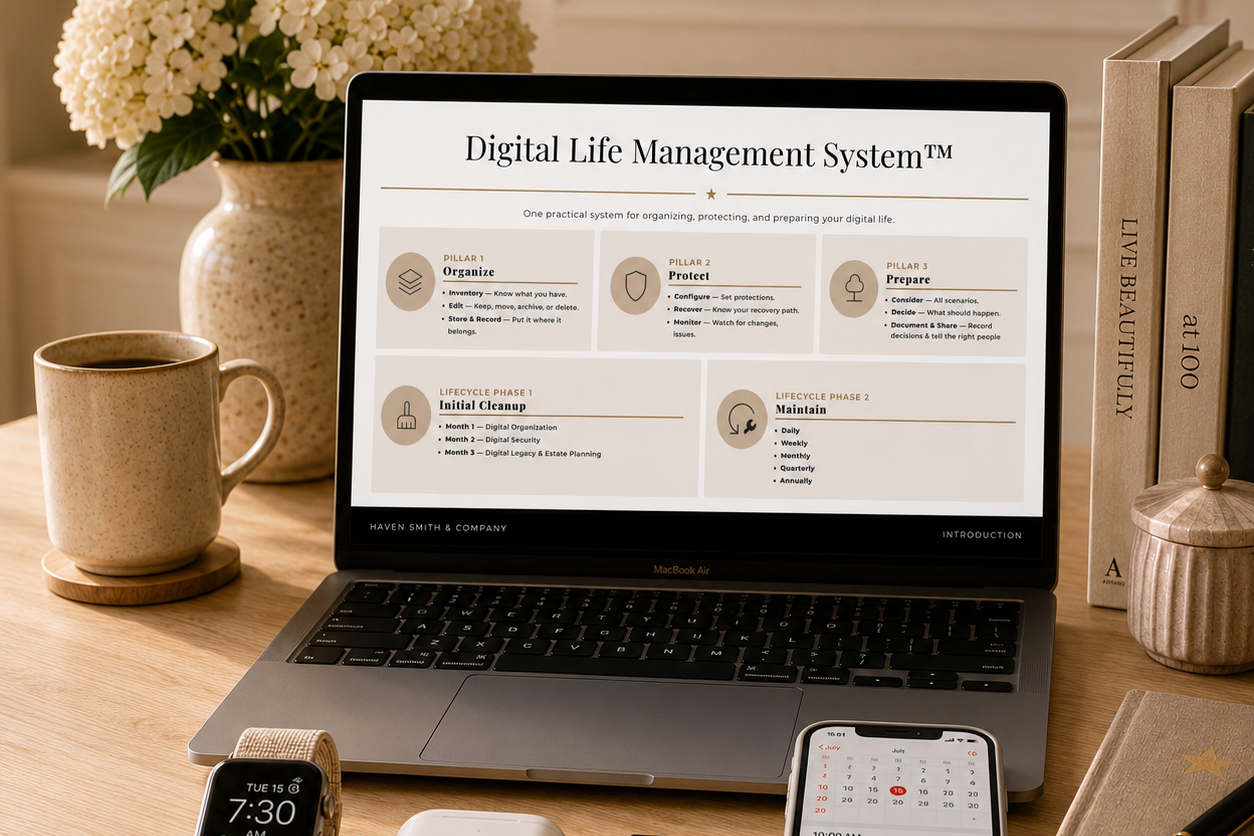
It has three pillars:
Organize
Protect
Prepare
It also has two lifecycle phases:
Initial Cleanup
Maintenance
The three pillars explain what the work includes. The two lifecycle phases explain how the work progresses over time.
During Initial Cleanup, you bring structure to what has accumulated, establish practical protections, and prepare essential information. During Maintenance, you use smaller habits and regular reviews to keep the foundation useful.
Together, these parts provide one practical way to manage the digital responsibilities supporting everyday life.
The Three Pillars
Each pillar uses a three-part method. The methods turn broad goals such as “get organized” or “be safer online” into a sequence of practical decisions.
Pillar One: Organize
Organization creates visibility and structure. It helps you understand what you have, decide what deserves to remain, and establish reliable places for important information. The Organize Method includes Inventory, Edit, and Store and Record.
Inventory — Know What You Have
Begin by identifying the accounts, records, devices, files, applications, subscriptions, storage locations, and digital property you are managing. You do not need to document every minor item immediately. Start with the areas supporting your identity, money, healthcare, work, household, family, and important records. An inventory replaces vague awareness with useful information. It reveals what exists, where complexity has accumulated, and which areas deserve attention first.
Edit — Keep, Move, Archive, or Delete
Once you understand what exists, decide what should happen to it. Some information should remain where it is. Some belongs in a more reliable location. Some should be archived for future reference. Some accounts, applications, subscriptions, files, and devices are no longer useful and can be removed responsibly. Editing is not simply deleting clutter. It is deciding what deserves continued space, attention, protection, and maintenance.
Store and Record — Put It Where It Belongs
The final step is to establish reliable locations and document what should not depend on memory. Store the actual file, record, photograph, or information in an appropriate place. Record the context you or another person may need later, such as what an account is used for, where important information is kept, who is responsible for it, or when it should be reviewed. Organization does not require perfect folders or an empty inbox. Its purpose is to make important information easier to find, understand, and manage.
Pillar Two: Protect
Protection becomes more focused once you know what you are managing and which parts carry the greatest consequences. The Protect Method includes Configure, Recover, and Monitor.
Configure — Put Protections in Place
Review the protections around important accounts, devices, information, and access points. This may include passwords, authentication, device protections, account settings, access permissions, alerts, and the email addresses or phone numbers connected to important accounts. Not every account deserves the same level of attention. Begin with the accounts supporting identity, finances, communications, records, and access to other services.
Recover — Know Your Recovery Path
Protection is incomplete if you do not know how access would be restored. Confirm that recovery email addresses and phone numbers are current. Understand which devices are trusted, where recovery codes are kept, and what steps would be required if access were lost. A sound recovery path reduces dependence on memory, outdated information, and devices you may no longer have.
Monitor — Watch for Changes and Problems
Some protections require continued attention. Monitoring may include financial transactions, account alerts, credit reports, recovery-information changes, security notifications, unfamiliar devices, or permissions granted to other people and services. Monitoring does not mean watching everything constantly. It means deciding what deserves continued attention and reviewing it at an appropriate interval.
Pillar Three: Prepare
Preparation addresses what should happen when circumstances change. The Prepare Method includes Consider, Decide, and Document and Share.
Consider — Think Through Relevant Scenarios
Consider situations in which you may be unavailable or someone else may need to help. These situations may include travel, illness, a lost device, a household emergency, incapacity, business interruption, separation, retirement, or death. The relevant scenarios will depend on your responsibilities. A parent, caregiver, professional, and small-business owner may each need to prepare different information.
Decide — Determine What Should Happen
Decide what information should remain private, what a trusted person may need, which accounts or devices require instructions, and what should happen to important records or digital property. You may also need to determine how household or business responsibilities would be handled and which questions require help from legal, financial, or cybersecurity professionals. Digital preparation supports those professional relationships. It does not replace them.
Document and Share — Record Decisions and Tell the Right People
A decision is difficult to follow if it exists only in your memory. Document essential information responsibly and make sure the appropriate people know that it exists. This does not mean sharing passwords casually or giving unrestricted access to personal accounts. It means creating a practical path that a trusted person can follow if circumstances require it. Haven Smith & Company provides professional Digital Life Management education and guidance. Our work is not legal, financial, or cybersecurity advice and does not replace advice from appropriately qualified professionals in those fields.
The Two Lifecycle Phases
The pillars describe the work. The lifecycle phases provide the rhythm.
Lifecycle Phase One: Initial Cleanup
Initial Cleanup is the concentrated period in which you examine what has accumulated, make foundational decisions, and establish better practices.
At Haven Smith & Company, Initial Cleanup follows a three-month sequence:
Month One: Digital Organization
Month Two: Digital Safety
Month Three: Digital Legacy and Estate Planning
These months provide focus rather than rigid deadlines. You may spend more or less time in a particular area depending on your responsibilities and the amount of work involved.
The order matters. Organization creates visibility. Protection directs attention toward what carries the greatest consequences. Preparation makes important information useful when circumstances change.
Following the sequence allows each month to build on the one before it.
Follow the complete Initial Cleanup through the Digital Life Management Course Bundle. The bundle guides you through Digital Organization, Digital Safety, and Digital Legacy and Estate Planning in order.
View the Digital Life Management Course Bundle
Lifecycle Phase Two: Maintenance
Maintenance begins after Initial Cleanup has established a workable foundation.
It includes:
Daily habits
Weekly resets
Monthly reviews
Quarterly checks
Annual planning
Daily and weekly habits help you handle active information before it becomes another backlog. Monthly and quarterly reviews address accounts, subscriptions, storage, protections, records, and recent changes. An annual review examines the larger picture and accounts for changes in your personal, family, or business responsibilities.
Not every category needs attention at every interval. Maintenance should reflect what you manage and which areas change most frequently. Initial Cleanup builds the foundation. Maintenance keeps the foundation current. The goal is not to remain in a permanent state of cleanup. It is to reach a point where smaller habits and regular reviews replace repeated rescue projects.
Use the Digital Life Management Workbook to inventory what you have, document important decisions, and create a Maintenance schedule suited to your responsibilities.
View the Digital Life Management Workbook
What the Framework Can Help You Manage
Digital Life Management applies across several parts of life because digital responsibilities rarely remain inside one category.
Personal Life
Personal Digital Life Management may include email, financial accounts, healthcare portals, devices, files, photographs, subscriptions, communications, and important records. The framework helps you understand how those pieces connect and where greater clarity, protection, or preparation is needed.
Family and Household
Family and household responsibilities may include shared records, children’s information, healthcare documents, household services, emergency contacts, family photographs, and caregiving information. The framework helps establish what is shared, what remains private, who is responsible, and what another person may need.
Professional Life
Professional responsibilities may include work accounts, devices, records, contacts, credentials, communications, and information connected to employment or professional standing. Digital Life Management helps clarify the boundary between personal and professional information and identify what should be documented or maintained.
Small Business
Small-business owners may manage business accounts, financial records, subscriptions, devices, client information, vendor access, important contacts, and responsibilities that depend heavily on the owner. The framework helps distinguish personal and business information, reduce owner dependency, and document what another authorized person may need if the owner is unavailable.
Digital Legacy and Estate Preparation
Digital legacy preparation may include digital property, photographs, important records, account information, documented decisions, trusted people, and coordination with legal and estate-planning professionals. The framework helps ensure that digital responsibilities are considered alongside the rest of a person’s estate and future planning.
Who the Digital Life Management System™ Is For
The framework is designed for people carrying real responsibilities across several parts of life.
That may include:
Busy professionals
Small-business owners
Parents
Caregivers
Adults helping aging parents
Families managing shared information
People preparing for major life changes
Anyone carrying important digital information for other people
You may be running a business, managing a household, raising children, helping aging parents, and maintaining your own financial, healthcare, and professional responsibilities. The framework helps you see those responsibilities together without treating them as one undifferentiated digital mess. You do not need a technical background. You need a practical way to make decisions about what you already manage.
What the Framework Is Not
The Digital Life Management System™ is not a promise of perfect digital organization. It is not a one-weekend decluttering challenge, a cybersecurity product, a password manager, a new application, or a requirement to place all of your information in one location. It does not ask you to give every account equal attention or spend the rest of your life maintaining elaborate folders and inventories. It also does not replace legal, financial, estate-planning, or cybersecurity professionals. The framework gives you a practical method for making better decisions across the tools, accounts, information, and responsibilities you already have.
How Haven Smith & Company Helps
Haven Smith & Company provides several ways to learn and apply the framework.
Free Resources
The Digital Organization Quick Start Guide introduces the framework and provides a practical place to begin. It is designed for people who want to understand the approach and take several useful first steps before beginning a larger cleanup.
Courses
The Digital Organization, Digital Safety, and Digital Legacy and Estate Planning courses guide people through the three parts of Initial Cleanup .Each course can be taken individually when one area needs attention first.
Digital Life Management Course Bundle
The course bundle provides the complete Initial Cleanup sequence. It is the most direct way to move through Organize, Protect, and Prepare in order.
Digital Life Management Workbook
The workbook provides inventories, worksheets, planning pages, checklists, and reviews. It can be used independently or alongside the courses to document decisions and establish Maintenance practices.
Private Digital Strategy Sessions
Private sessions help individuals, families, professionals, and small-business owners identify priorities, work through complicated areas, and create plans suited to their responsibilities. They are particularly useful when several people or areas of life are involved, or when personal and business information has become intertwined.
Workshops
Workshops provide practical Digital Life Management education for businesses, community organizations, professional groups, and other audiences. They can address broad foundations or focus on a particular topic, responsibility, or area of risk.
What You Will Learn From Haven Smith & Company
Haven Smith & Company creates practical education about the digital responsibilities supporting modern life. Through our blog, courses, podcast, videos, workshops, and private services, we explore topics including:
Digital Organization
Digital Safety
Fraud prevention and awareness
Accounts, passwords, and identity
Devices and access
Payments and financial records
Digital legacy and estate preparation
Emergency readiness
Family information management
Small-business digital responsibilities
Maintenance habits and reviews
The goal is not to make technology the center of your life. It is to help you manage the technology, information, and responsibilities already supporting it.
Choose Where to Begin
Complete the Full Initial Cleanup
Follow Organize, Protect, and Prepare through the Digital Life Management Course Bundle.
Receive Private Guidance
Work with Haven Smith & Company through a private Digital Strategy Session.
Begin With a Free Introduction
Download the Digital Organization Quick Start Guide for an introduction to the framework and a practical place to begin.
Welcome to a More Practical Way of Managing Modern Life
You do not need to address everything at once, and you do not need to become a technology expert. You need a clear framework, a reliable place to begin, and practical support for continuing over time.
Begin by understanding what you have. Decide what matters. Establish appropriate protections. Prepare useful information. Maintain the foundation through smaller habits and scheduled reviews.
Organize what you have. Protect what matters. Prepare for what comes next.
Welcome to the Digital Life Management System™.