
Your Gmail, Google Photos, and Drive Need an Inactivity Plan
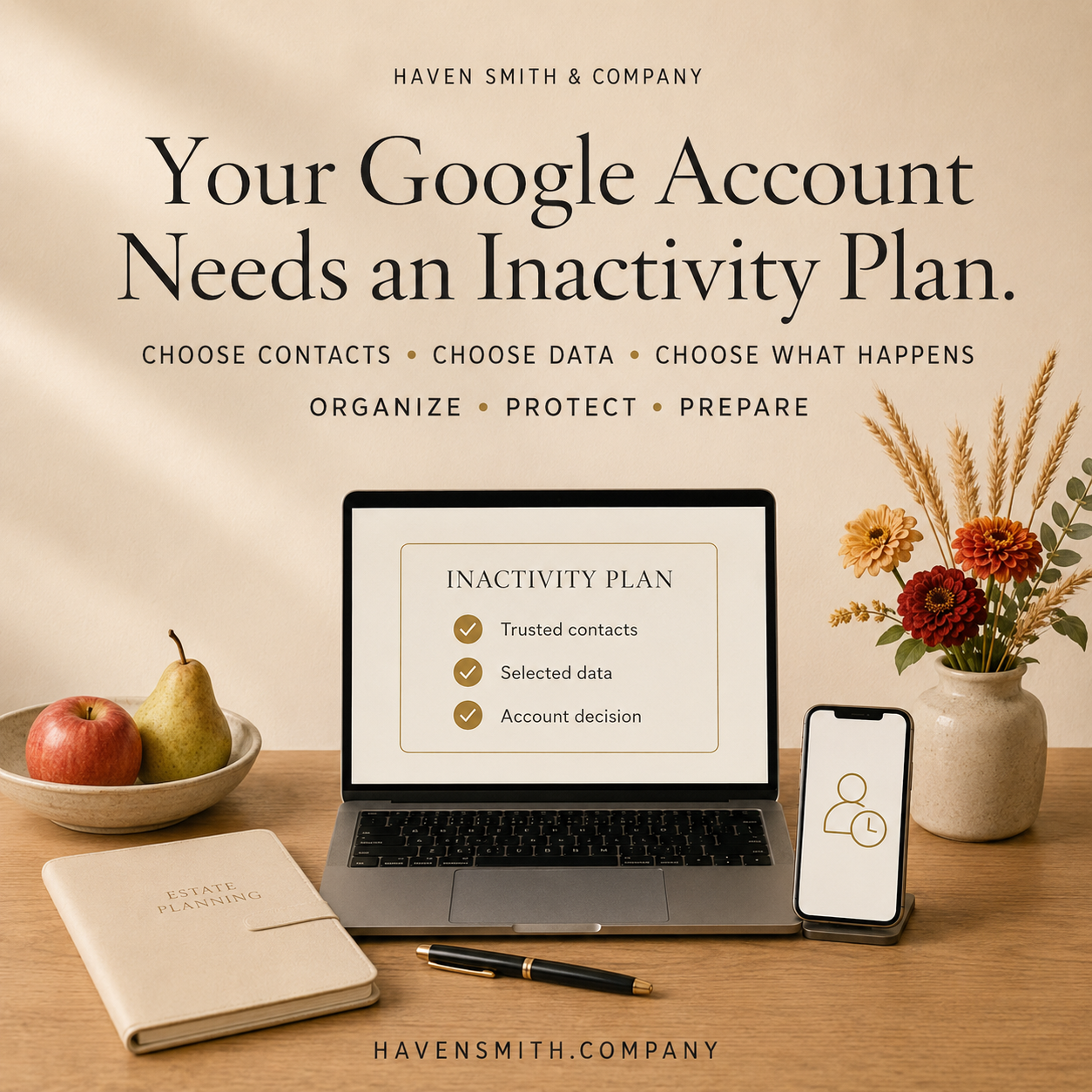
Google’s Inactive Account Manager can notify trusted people or share selected data—but only if you make the decisions before the account becomes inactive.
A Google Account can contain far more than email.
It may hold photographs, documents, calendars, contacts, videos, location information, financial records, business information and the recovery messages needed to access other services.
What would happen to that information if you died, became incapacitated or simply stopped using the account?
Google’s Inactive Account Manager allows you to make several decisions in advance. You can choose when Google should consider the account inactive, identify trusted contacts and select which eligible information each person may receive.
It is an important feature—but only if you set it up.
If You Read Only One Thing
Your Google Account may contain years of important information. Decide now who should be notified, what they should receive and whether the account should eventually be deleted.
Your Action Steps
Identify every personal Google Account you use.
Open Google’s Inactive Account Manager.
Choose how long Google should wait before activating the plan.
Select the people who should be contacted.
Decide which data each person may receive.
Write the message Google should send.
Decide whether the account should eventually be deleted.
Tell your trusted contacts that you selected them.
Review your recovery email and phone number.
Document the setting in your broader digital estate plan.
What Inactive Account Manager Does
Inactive Account Manager allows you to instruct Google to take certain actions after your account has been inactive for a period you select.
Google may:
Notify trusted contacts
Send a message you prepared
Allow selected contacts to download eligible information
Share different categories of information with different people
Delete the account if you chose that option
Google allows you to designate up to 10 people. You can share all eligible information with one person or assign different categories to different people. Review Google’s Inactive Account Manager guidance.
For example:
A family member might receive photographs and personal files.
An executor might receive financial or estate-related records.
A business partner might receive business documents.
A trusted friend might receive selected creative work.
The people do not all need access to the same information.
How Google Determines Inactivity
Google considers several signals, including:
Recent sign-ins
Activity stored in My Activity
Use of Gmail
Android activity
The feature is designed to activate only after the selected period of inactivity, not simply because you failed to open Gmail for a few days.
Before triggering the plan, Google attempts to contact the account owner through available contact information. That is one reason to maintain an accurate recovery email and phone number.
Your Contacts Are Not Notified During Setup
Google does not notify trusted contacts when you initially select them.
They receive the notification only after the account reaches the inactivity threshold and the plan activates.
That makes a separate conversation essential.
Tell each person:
That you selected them
Why you selected them
What type of information they may receive
What you would like them to do
Where your broader digital estate instructions are maintained
A platform notification can provide data. It cannot provide the entire context surrounding your wishes.
Contacts Do Not Receive Your Password
Inactive Account Manager does not simply give someone your Google password or allow them to impersonate you inside the account.
If you selected data sharing, the trusted contact receives an email describing the information you authorized and a link to download it. Google uses phone verification to help confirm that the intended person receives access.
This is an important security distinction.
The person receives authorized access to selected data—not unrestricted permission to operate as the account owner.
Choose the Data Intentionally
Do not select every category automatically.
Consider:
What information has emotional value?
What information may be needed to administer an estate?
What records belong to another person?
What information contains confidential business or client material?
What should be preserved?
What should remain private?
What information would create unnecessary burden?
A photograph library and a business archive may require different recipients and instructions.
Review the available categories from inside your Google Account because services and eligible data may change over time.
Google May Delete Inactive Accounts
Google reserves the right to delete a personal Google Account and its data after the account has remained inactive for at least two years. Google says it sends notifications to the account and available recovery addresses before deletion. Review Google’s Inactive Account Policy.
A person who assumes that information will remain online forever may leave important photographs, records or correspondence at risk.
Inactive Account Manager allows you to make intentional choices rather than relying exclusively on a provider’s default policy.
What Happens Without a Plan?
Google may work with immediate family members or authorized representatives to close a deceased person’s account. In limited circumstances, it may provide account content after reviewing a request.
Google does not provide passwords or login credentials, and approval is not automatic. Review Google’s deceased-user request process.
Planning in advance gives you greater control over:
Who is contacted
Which information may be shared
What message is delivered
Whether the account should be deleted
It Still Is Not a Complete Digital Estate Plan
Inactive Account Manager applies to eligible Google data. It does not address:
Your Apple or Microsoft accounts
Social-media profiles
Financial accounts
Website domains
Cryptocurrency
Local computer files
External drives
Other cloud services
Every password or passkey
Legal authority during incapacity
Instructions for preserving, transferring or deleting the rest of your digital property
It also does not replace a will, trust or power of attorney.
Platform settings, practical instructions and legal documents should be coordinated. Consult a qualified estate-planning attorney for advice about fiduciary authority, electronic communications and digital assets.
Review the Plan Regularly
Review Inactive Account Manager:
Annually
After a marriage or divorce
After a death
When a trusted relationship changes
When you create or stop using a Google Account
When your estate plan changes
When important business responsibilities change
A useful plan must reflect your current accounts, relationships and wishes.
One Important Piece of the Plan
Google’s Inactive Account Manager is not the entire digital estate plan.
It is one valuable piece.
Set it up, tell the people you selected and record the decision within a broader system that explains what you have, who should be responsible and what you want to happen.
Resources Outside Haven Smith & Company
Haven Smith & Company Resources
Free Digital Life Management resources:
https://www.havensmith.company/start-hereDigital Legacy & Estate Planning Course:
https://www.havensmith.company/digital-legacy-estate-planningDigital Life Management Course Bundle:
https://www.havensmith.company/bundleBook a free 15-minute consultation:
https://www.havensmith.company/free-consultation
Haven Smith & Company provides practical education, organization and planning guidance. It does not provide legal advice.